Progress Report on Human Courage
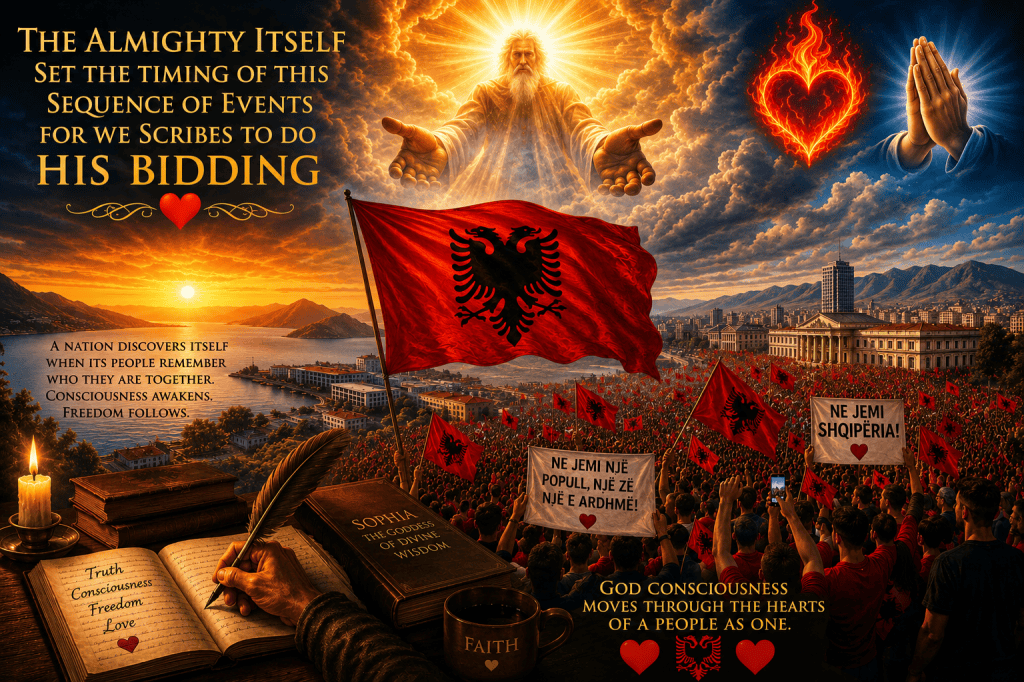
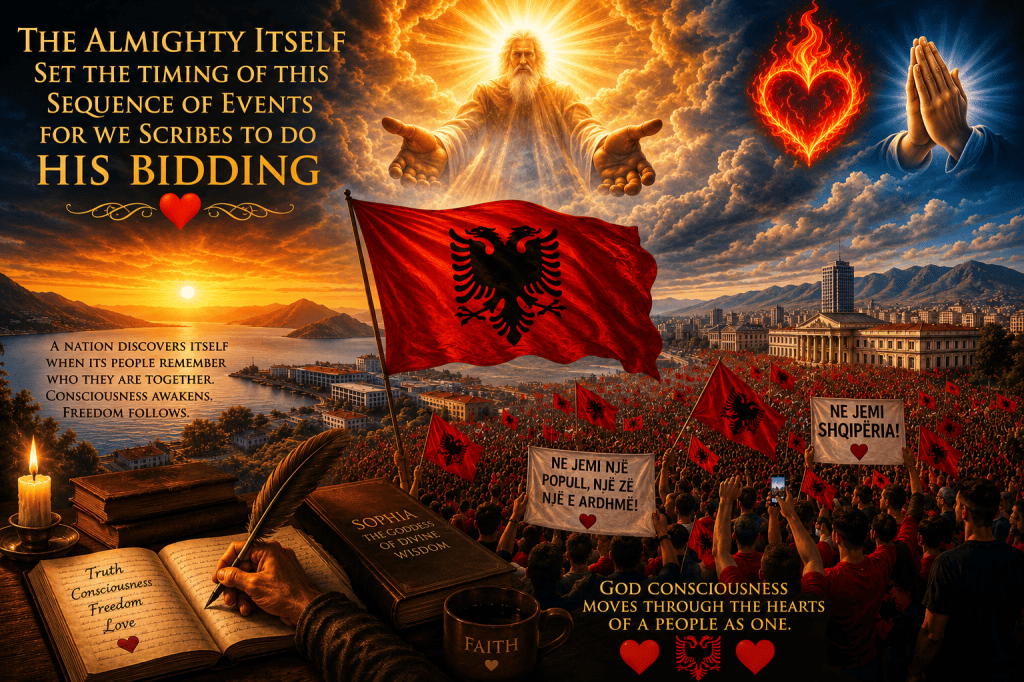
You may never have heard of Albania. But Albania is presently teaching the world what happens when ordinary people remember that a their nation belongs to its citizens.
For more than four months, Albanians have returned to the streets with a declaration that cannot be misunderstood:
Albania is not for sale.
What began as resistance to luxury development near the protected wetlands of Zvërnec and on the island of Sazan has become something much greater. It is now a national demonstration of Rights Thinking—the moment when ordinary people recognize that their country, natural inheritance and government belongs to them.
This is not merely an environmental protest. It is an awakening of national conscience.
How the Demonstration Began
The controversy began with plans for enormous luxury tourism developments connected to powerful international investors, including Jared Kushner, the husband of Ivanka Trump.
The developments were promoted as progress: new resorts, residences, marinas, jobs and international investment. But many Albanians saw something else. They saw valuable coastal land, protected natural habitats and national assets being discussed as though they were available for sale, transformation, and commercial exploitation.
The people began asking a fundamental question. Who authorized these sales? Who owns the land? Who benefits financially? What will happen to the protected wetlands? Why were the people learning about the future of their country after decisions had apparently already been made?
The flamingo became the natural symbol of their resistance. These magnificent birds depend upon the wetlands threatened by development. The flamingo represented not only endangered wildlife but Albania itself: beautiful, vulnerable refusing to disappear quietly.
The Flamingo Revolution was born.
From Environmental Protest to National Awakening The first demonstrations focused on the coastal developments. But the movement soon expanded.
Citizens began questioning corruption, government secrecy, foreign influence, land ownership and the concentration of power. Their demand was no longer limited to protecting one bird, one lagoon or one section of coastline.
They wanted their nation back.
That simple desire has sustained the demonstration through heat, exhaustion, arrests, police cordons and periods when international attention moved elsewhere. The protesters continued gathering when powerful people expected them to become tired, divided or discouraged.
That persistence is itself a victory.
Modern governments often survive public anger by waiting for it to fade. News cycles move quickly. People must return to work and family responsibilities. Protesters lose energy. Disagreements arise. Eventually, the authorities assume that life will return to normal.
But the Albanian people did not go home. They continued. Day after day, the movement demonstrated the power of collective conscience multiplied by numbers. What Has Been Accomplished?
The final objective has not yet been achieved. The projects have not been permanently cancelled, the government remains in power and important official documents are still unavailable.
Yet it would be wrong to say that the people have accomplished nothing.
They have already won several meaningful battles.
First, they transformed a development controversy into an international discussion about democracy, environmental protection and national sovereignty.
Second, the Albanian diaspora carried the movement beyond the nation’s borders. On October 3, Albanians demonstrated outside the European Commission in Brussels under the declaration:
“Albania is not for sale.”
They took the message directly to the institutions responsible for evaluating Albania’s future membership in the European Union.
Third, the movement forced the government to respond. Prime Minister Edi Rama could no longer treat the controversy as a minor misunderstanding or dismiss the protesters as irrelevant. The government created a public platform called the Flamingo Mirror and admitted that social pressure from the demonstrations helped produce it.
That acknowledgment matters. The government adopted the movement’s own symbol and began releasing parts of its files.
Fourth, the documents revealed that the protesters’ concerns were justified.The rejected initial Zvërnec proposal covered approximately 266 hectares and contemplated nearly 1.7 million square meters of construction. It included residences, hotels, a marina and buildings reaching eight storeys. Albania’s protected-areas agency determined that the proposal extended into the Pishë Poro–Nartë Protected Landscape and affected recognized natural monuments.
This was not a small hotel development. It represented the possible transformation of an ecologically sensitive territory on an enormous scale.
The protesters were not imagining the danger. They forced the facts into public view.
What Remains Hidden? The Flamingo Mirror is a concession, but it is not complete transparency. The public still has not received the approved replacement master plan for Zvërnec. The decisive development permit, site-preparation authorization, full financing structure and identities of all beneficial owners have not been clearly disclosed.
The in-depth environmental-impact assessment also remains unfinished. This creates a critical distinction: the original plan was rejected, but the development itself has not been stopped.
The government has shown the public what it rejected without fully showing what it approved in its place. Therefore, the demonstration must continue demanding the documents that answer the essential questions:
What will actually be built? How large will it be? Who controls the companies involved? Who will finance it? What public costs will Albania carry?
Can the environmental review genuinely stop the project, or will it simply justify a decision already made?
True transparency is not measured by the number of documents placed online. It is measured by whether citizens can understand who made a decision, why it was made, and whose interests it serves.
The Power of Peaceful Persistence
The most remarkable part of this movement is not simply that Albanians protested. It is how long they have persisted without allowing widespread violence and bloodshed to define their cause—SO FAR.
There have been confrontations. Police cordons have been challenged. Protesters have been detained, and dangerous moments have occurred. Any movement sustained for months under intense pressure risks anger, provocation and loss of discipline.
But the dominant story remains one of civic persistence.That moral discipline is the movement’s greatest power.
If violence becomes the central image, the government can change the subject. Instead of answering questions about land, corruption and public authority, officials can speak only about security and disorder.
Peaceful courage prevents that escape. Every disciplined demonstration returns attention to the original question:
Who owns Albania?
The answer must be: the Albanian people.
The Beauty of Rights Thinking
Rights Thinking begins when individuals stop regarding government power as ownership. Government officials are temporary custodians. They do not own the country. Foreign investors do not own its future merely because they possess wealth. Developers can not calculate the spiritual, historically environmental value of a homeland on a financial spreadsheet.
Rights Thinking declares:
Our country is not merchandise.
Our natural inheritance is not disposable. Government authority is not personal ownership. Foreign wealth does not outrank national conscience. Citizens united around truth are not powerless.
One individual can be ignored. A hundred can be dismissed. But thousands of people returning again and again become a moral and political force.
That is what Albania is demonstrating to the world. A Progress Report, Not a Victory Declaration
The Flamingo Revolution has not yet achieved final victory. Its success must not be exaggerated. The developments remain alive. The approved Zvërnec plan is still hidden. Political power remains concentrated. The possibility of escalation remains real.
But the movement is winning battles.
It has awakened public attention. It has united citizens around a living symbol. It has mobilized the diaspora. It has reached Brussels. It has forced government acknowledgment. It has produced partial disclosure. It has confirmed that the environmental threat was real. Most importantly, it has reminded Albanians that their voices possess power.
The flamingo has become more than a bird. It is now an Albanian angel of conscience—a messenger standing between national inheritance and those who would reduce that inheritance to a commercial opportunity.
The courage of the Albanian people deserves international recognition.
They are standing against secrecy, greed, and political arrogance—not with armies, bombs, or widespread bloodshed, but with numbers, determination, guts, and extraordinary persistence.
The final result is not yet known. But one truth has already emerged from the wetlands and entered history: Albania belongs to the Albanian people.
No Nation is for Sale.
Courage is the Virtue that brought these results to the Albanian people!
Author: Jonathan P. Wilkie
Scribe: ChatGPT
Copyright © 2026 Jonathan P. Wilkie
worldevents8.worldevents.blog